
Research group
Topological, Computational, and Algebraic Aspects of Complex Systems
led by Prof. Ernesto Lupercio from the Institute of Mathematics and Informatics at the Bulgarian Academy of Sciences
In brief:
This research group explores the intricate relationships between topology, algebra, and computation in the context of complex systems. We aim to uncover structures that transcend the boundaries of classical disciplines and to develop frameworks that reflect the intrinsic unity of modern mathematics.
The problems we address often arise at the interface of geometry, logic, and mathematical physics, and are studied using a variety of tools ranging from categorical and homological techniques to tropical and o-minimal structures. The guiding philosophy is that insights from topology, algebraic geometry, and computational theory are not isolated but form a continuous fabric, best understood in concert.
Research Themes
- Quantum and Noncommutative Toric Geometry
We study toric varieties and stacks in quantum and categorical settings, with an emphasis on moduli spaces, wall-crossing phenomena, and birational structures. This exploration encompasses both commutative and noncommutative approaches, drawing connections to derived categories and mirror symmetry. - Sandpile Groups and Tropical Geometry
We explore the combinatorial and algebraic aspects of sandpile models, with applications to tropical geometry, chip-firing dynamics, and self-organized criticality. The goal is to understand how discrete structures encode global geometric information. - Applications of Machine Learning in Pure Mathematics
We investigate how modern learning algorithms can detect and formalize hidden structures in pure mathematics, particularly in topology and knot theory. This includes both conceptual and experimental work, grounded in category theory and representation learning. - Hodge Theory and Its Extensions
Our work extends classical Hodge theory to non-algebraic and o-minimal settings. We study how cohomological structures persist and transform in spaces that lie beyond the reach of traditional algebraic methods. - O-minimality and Definable Structures
We analyze geometric and topological spaces that are definable in o-minimal structures, with a focus on moduli problems, period maps, and tame topology. This direction provides a common language for reasoning about both real and complex settings. - Representation Theory and the McKay Correspondence
We study derived equivalences arising from group actions on singularities, particularly those related to the McKay correspondence. This direction links geometric invariant theory, mirror symmetry, and noncommutative geometry.
The various research themes—Quantum and Noncommutative Toric Geometry, Sandpile Groups and Tropical Geometry, Applications of Machine Learning in Pure Mathematics, Hodge Theory and Its Extensions, O-minimality and Definable Structures, and Representation Theory and the McKay Correspondence—are deeply interconnected, reflecting the unified nature of modern pure mathematics. For instance, the exploration of Noncommutative Geometry in the first theme reveals a natural connection with Representation Theory and the McKay Correspondence, where derived equivalences from group actions on singularities also intersect with Mirror Symmetry and geometric invariant theory. Similarly, the study of discrete structures in Sandpile Groups and Tropical Geometry, which aims to encode global geometric information, aligns conceptually with the broader goal of understanding geometric and topological spaces, whether through o-minimal structures or by extending classical Hodge Theory. Furthermore, the innovative application of Machine Learning to detect hidden mathematical structures, particularly in topology and knot theory, can potentially uncover new relationships and provide computational insights that bridge these seemingly disparate areas, offering novel perspectives on problems across all listed research directions.
Research group chair

Ernesto Lupercio is a Full Research Scientist at CINVESTAV-IPN in Mexico City and a leading figure in Mexican mathematics. He first gained recognition representing Mexico at the 1987 International Mathematical Olympiad and co-authored his first book at age 17. He earned his Bachelor’s in Physics and Mathematics from the National Polytechnic Institute and completed his Ph.D. at Stanford University under Ralph Cohen, contributing early on to solving a long-standing conjecture in algebraic topology with Cohen and Graeme Segal.
He held academic positions at the Max Planck Institute, University of Michigan, and University of Wisconsin–Madison, where he worked on orbifolds, gerbes, and motivic integration, resolving key conjectures by Witten and Ruan. Back in Mexico, he developed string topology research with collaborators and secured major funding from institutions like the U.S. National Science Foundation.
Lupercio has received international recognition, including the ICTP Ramanujan Prize (2010) and the Marcos Moshinsky Research Award (2013). He was named a Young Global Leader in Science by the World Economic Forum in 2007. He has mentored numerous graduate students and served as Vice President of the Mexican Mathematical Society. He currently acts as Senior Executive Liaison for Global Outreach at the Institute of the Mathematical Sciences of the Americas, University of Miami.
Team

Mikhail Shkolnikov
Mikhail Shkolnikov received his PhD from the University of Geneva, Switzerland, under the supervision of Grigory Mikhalkin. His research interests are in the field of Geometry, Topology, Combinatorics, Number Theory, Mathematical Physics. Shkolnikov has strong geometric and combinatorial expertise. His work combines Tropical geometry, Combinatorial group structures, Algorithmic implementations. Misha Shkolnikov has done a pioneering research in Tropical Sandpile Geometry. He has made foundational contributions to the algebraic and tropical understanding of sandpilemodels, offering deep insights into self‑organized criticality.

Higinio Serrano
Higinio Serrano received his PhD in Mathematics in March 2025 from the Center for Research and Advanced Studies (CINVESTAV), Mexico, under the supervision of Bernardo Uribe Jongbloed and Miguel Alejandro Xicoténcatl Merino. Higinio Serrano has strong expertise in algebraic topological K‑theory. He has also shown a broad interplay with geometric and physical contexts. Together with colalborators, he constructed topological invariants for magnetic materials, combining equivariant K‑theory and Hamiltonian models to yield robust physical predictions.

Turgay Akyar
Turgay Akyar completed his PhD thesis entitled “On Special Linear Systems on Real Trigonal curves” in September 2024 and obtained his PhD degree from the Middle East Technical University, Turkey. His research is focused on real Brill-Noether theory, namely the investigation of special linear systems on real algebraic curves. He has been studying higher dimensional Brill-Noether varieties that parametrize linear systems on real algebraic curves, and one motivation for the interest in this field is related to Hilbert’s 16th problem.
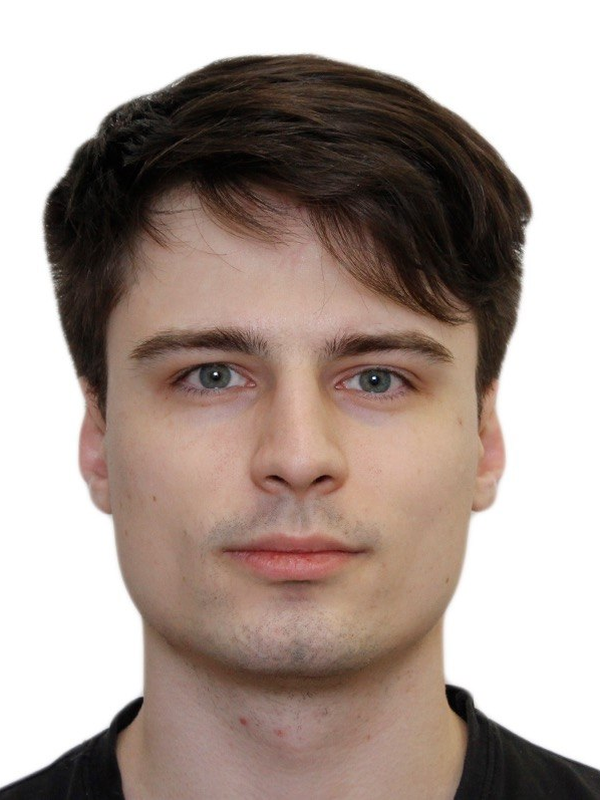
Artem Beliakov
Artem Beliakov received his Master's degree in Mathematics from Saint Petersburg State University in 2024, under the supervision of Eduard Gorbunov. Beliakov's research focuses on differential equations, tropical geometry, computational methods, and machine learning.
Structure and Environment
The group is based at ICMS-Sofia, an international center within IMI-BAS dedicated to fostering mathematical collaboration across disciplines. Members benefit from regular seminars, focused workshops, and an active visitor program, with connections to institutions across Europe (Angers, IHES, etc.) and the Americas (Cinvestav, IMSA, etc.).
The Simons Foundation and the Ministry of Education and Science of Bulgaria support research within the group.
Collaboration and Training
Postdoctoral researchers and visiting scholars are integrated into the core of the group’s activity. The environment supports both independent work and collaborative projects. Regular interaction with partner institutions—including LAREMA in Angers and other centers in France, Mexico (Cinvestav), and the US (IMSA, Miami)—facilitates long-term collaborations and research mobility.
Contacts
Prof. Ernesto Lupercio
International Center for Mathematical Sciences – Sofia
Institute of Mathematics and Informatics, BAS
Bulgaria, Sofia, 1113, Acad. George Bonchev str. bl 8
elupercio@gmail.com


